
The Dubai event website checklist: what to include, what it costs and when to launch
A planning checklist for Dubai organisers and exhibitors: the pages, features and costs that fill the room, and what to leave to specialist ticketing and badge suppliers.
By Mateo TintaUpdated 10 min read
Short answer
A good event website tells guests what the event is, when and where it is, who it is for, why to go and how to register, all on the first screen. Keep registration to a few fields, make it work on a phone, and have it live at least six weeks before the date. With Konfianz, an event landing page starts at AED 3,500 and a full event microsite at AED 7,000, quoted as a fixed price.
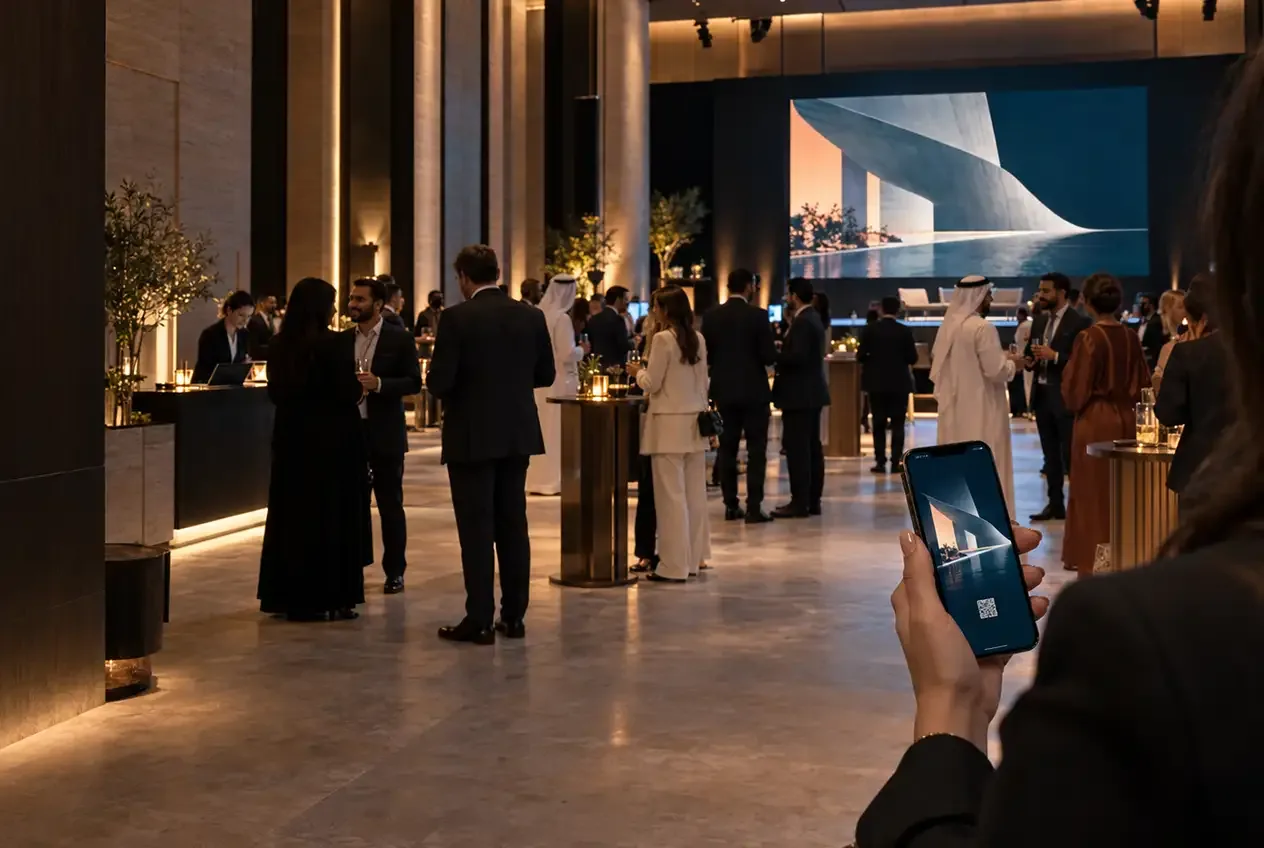
Why your event needs its own website
A good-looking event page that is hard to read on a phone, asks for too much at registration or leaves guests without a confirmation costs you attendees and creates extra work on the day. Use this checklist to plan your event website, or hand it to your team or supplier as a brief.
An event website is a site built to promote and run one event. When it is small, separate from your company website and carries the event's own look, it is usually called an event microsite. The words are used loosely: a one-page version is an event landing page, a multi-page version with an agenda and speakers is an event website, and clients will use all three to mean the same thing.
The reason to build one is simple. Dubai World Trade Centre alone hosted 401 events in 2025, with close to 3 million participants (Dubai Media Office). Your event competes for the same inboxes and calendars as all of them. A link that explains the event in ten seconds and lets people register in one minute is the cheapest thing you can do to fill the room.
You need a dedicated page when the event has a fixed date, people must sign up or be invited, or you want one link to put on invitations, stand artwork, screens and emails. You can skip it for a small internal meeting where a calendar invite is enough.
The checklist: what every event website needs
Most event sites fail because they hide the basics. Put these on the first screen and the rest of the page has something to build on.
- The essentials above the fold: event name, date, venue with a map link, and one clear register button.
- One sentence on why go. What a guest learns, sees or gains, not a paragraph about your company.
- Agenda and speakers. Even a draft agenda lifts registrations; update it as it firms up.
- A short registration form. Name, work email and company are enough for most events. Every extra field costs sign-ups.
- A confirmation that does something. An instant thank-you page and email with the details, plus an add-to-calendar link.
- Practical details. Parking, how to get there, dress code, contact for questions.
- Phone first. Most guests will open the link from WhatsApp or email on a phone. Design for that screen first.
- Light and fast. Large halls and busy venues can have slow connections. Keep pages light so a QR code scan on the day opens quickly.
- Your brand, and the event's own look. Logos, sponsors and partners placed so the page feels organised, not crowded.
Conferences, exhibitions, corporate events and launches: what changes
The core stays the same. What changes is who you are talking to and what you need them to do next.
| Event type | Main goal of the website | What to add |
|---|---|---|
| Conference or summit | Fill seats and show the programme | Speaker profiles, a full agenda, sponsor logos, a clear registration form |
| Exhibition or trade show stand | Bring the right visitors to your stand and capture leads | Stand number and hall map, meeting booking, a QR code for lead capture |
| Corporate or awards event | Manage an invitation list | Invitation-only or private registration, dress code, programme for the evening |
| Property or product launch | Create interest and get RSVPs | Strong visuals, a short story, RSVP and a thank-you that continues the conversation |
| Annual event or series | Build an audience year after year | A recap page from the last edition and an early sign-up for the next |
For exhibitors, the website is mostly a pre-show tool and a follow-up tool. Send it before the show to book meetings, put its QR code on the stand, and use the same page afterwards to say thank you and share material. A stand that collects names on paper or business cards loses most of them within a week.
Registration, ticketing and badges: what the website should and should not do
This is where plans go wrong, because three different jobs get treated as one.
Konfianz builds the event website and registration page, the invitations, screen content and follow-up. We do not run ticketing or print badges. If your event needs them, we make sure the website, the email and the QR code point cleanly to the platform or supplier you are using, so guests are never sent to a dead end.
Handling guest data properly
A registration form collects personal data, and the UAE has a federal data protection law (Federal Decree-Law No. 45 of 2021) that sets rules for it. In summary, consent must be clear and positive, you should say why you are collecting the data, collect only what you need, and offer an easy way to opt out of marketing (Clyde & Co summary). Put a plain-language privacy line under your form, do not pre-tick marketing boxes, and ask your legal adviser to check the wording. This is general information, not legal advice.
What an event website costs in Dubai
For a general guide to website prices in Dubai, see how much does a website cost in Dubai. For an event, the price mostly depends on how many pages and languages you need, how much content has to be written or designed, and how tight the date is.
| What you need | Starting price with Konfianz | Best for |
|---|---|---|
| Event landing page | From AED 3,500 | One event, one page: details, registration and a thank-you |
| Event microsite | From AED 7,000 | A fuller site with agenda, speakers, sponsors and a recap page |
| Full event kit | Quoted per event | Website plus invitations, screen content, QR lead capture and follow-up |
Ask any supplier what is included in the quote, how many rounds of changes you get, and who writes the content. A low price that leaves out content, registration or the thank-you email usually costs more by the time the event arrives.
 Case study · ITP Awards and EventsEvent microsites, collateral and email campaigns for award nights with fixed dates, many sponsors and one look to keep.See the ITP Awards and Events case study
 A plan that works back from your event date
Fixed dates reward early starts. This is a sensible plan for a mid-sized event; shrink it for a small one and keep the same order.
| When | What happens |
|---|---|
| 8 weeks before | Brief agreed. Date, venue, audience and the one action you want guests to take are confirmed. |
| 6 weeks before | Website live with registration open. First invitation sent. |
| 4 weeks before | Agenda and speakers added. Reminder to people who have not registered. |
| 1–2 weeks before | Final reminders, practical details and the confirmed running order. |
| Event week | Screens, stand artwork and QR codes in place. Registration closes or moves to on-site. |
| 1–2 days after | Thank-you email sent. Recap page or photos shared, with one clear next step. |
| 1 week after | Follow-up with everyone who registered or attended, while the event is still fresh. |
The follow-up is the step most teams skip, and it is where an event pays back. Everyone who registered gave you permission to be in touch about this event. A thank-you within two days and a short message a week later is usually the difference between a good event and a result you can measure.
Seven mistakes that cost registrations
- Burying the date and venue. If a visitor has to scroll to find them, many will not.
- Long forms. Ask for what you need to run the event. Ask for the rest later.
- No mobile testing. Check the page, the form and the confirmation on a real phone.
- A thin confirmation. The thank-you page should confirm the date, give the venue and offer a calendar link.
- Launching late. Registration opened two weeks before the date leaves little time for reminders.
- Leaving the website out of everything else. The link and QR code should be on invitations, emails, screens, stand artwork and speaker slides.
- No follow-up plan. Decide before the event what you will send afterwards and to whom.
How to choose who builds it
Event agencies, web studios, freelancers and ticketing platforms can all build you a page. Look for the one that fits your event and your date.
- They show real event work, not only company websites.
- The quote is a fixed price in writing, with what is included stated plainly.
- They plan backwards from your date and tell you what they need from you, and when.
- They are straight about what they do not do, such as ticketing or badge printing, and tell you who does.
- Invitations, screens and follow-up come in the same look, so your event feels like one thing.
Questions
Quick answers
Something else you want to know? Ask us on a 15-minute intro call.
Plan your eventWhat should an event website include?
The five basics: what the event is, when, where, who it is for and how to register. Then an agenda, a short registration form, a thank-you page with a calendar link and the practical details. Test everything on a phone. Choose a landing page for a single event with one action, or a microsite when you need an agenda, speakers and sponsors. Aim to be live at least six weeks before the date.
How much does an event website cost in Dubai?
With Konfianz, an event landing page starts at AED 3,500 and an event microsite at AED 7,000, excluding VAT, with a fixed price agreed in writing before work starts. A full event kit with invitations, screen content, QR lead capture and follow-up is quoted per event. Other suppliers vary, so always ask exactly what the quote includes.
What is the difference between an event website and an event microsite?
In practice the terms overlap. An event microsite is a small, separate site built for one event with its own look. An event website can be the same thing or a larger version with more pages. Either way it holds the agenda, speakers, venue and registration, and it is separate from your company website.
Do I need ticketing on my event website?
Only if guests pay to attend. Paid ticketing should run on a specialist platform that handles payment and entry securely, and your event website links to it. For free or invitation-only events, a registration form and a confirmation email are usually enough.
Can you print badges or run check-in at the door?
No. Konfianz builds the website, registration page, invitations, screen content and follow-up. Badge printing and door check-in are handled by the venue, the organiser or an on-site supplier. We make sure the QR codes and links on your website point to whatever they use.
How long does it take to build an event website?
It depends on content and approvals. A landing page can move quickly when the details and images are ready, while a full microsite needs more time for the agenda and speakers. Plan to be live at least six weeks before the event, and tell us the date early so we can plan backwards.
What should an exhibition stand website include?
The stand and hall number, a one-line reason to visit, a way to book a meeting, and a QR code on the stand that opens a short form or your key material. Use the same page before the show to invite visitors and after the show to follow up with everyone you met.
Do I need to follow data protection rules for event registration?
Yes. The UAE has a federal personal data protection law (Federal Decree-Law No. 45 of 2021). In summary, ask for clear consent, say why you collect the data, collect only what you need and give people an easy way to opt out of marketing. Ask your legal adviser to review your form and privacy wording. This is general information, not legal advice.

Written by
Mateo Tinta · Editor, Konfianz Insights
Mateo writes Konfianz Insights: practical guides on launches, websites and AI for property developers and premium brands in the UAE. Every guide is reviewed by the Konfianz founder before it is published.
More from MateoSources